
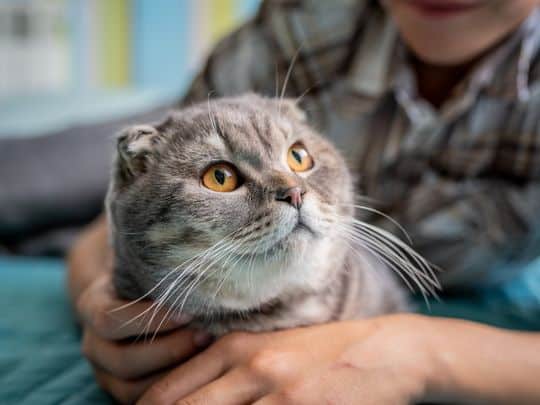
Have you ever noticed your cat sitting by a window, watching a bird, and suddenly making a series of quick, high-pitched sounds? These unusual noises can sound like tiny tweets, clicks, or rapid chatter. While they may seem amusing, cat chirping and chattering are meaningful parts of feline communication.
Cats use a wide range of vocalizations to express emotions, respond to their surroundings, and interact with people and other animals. Chirping may occur when a cat sees prey, becomes excited during play, seeks attention, or reacts to something interesting. Understanding the situation surrounding the sound can help you interpret what your cat may be experiencing.
For cat owners, recognizing normal vocal behavior is an important part of understanding feline body language. It can also make everyday interactions more enjoyable and help you notice when a change in vocal behavior may deserve closer attention.
What Is Cat Chirping and Chattering?
Cat chirping is a short, distinctive vocalization that often sounds different from a traditional meow. It may consist of quick, repeated notes that resemble a bird’s call. Some cats also make small clicking or chattering sounds while keeping their eyes fixed on something nearby.
Although the terms “chirping,” “chattering,” and “chittering” are sometimes used interchangeably, individual cats may produce slightly different sounds. One cat may make a soft trill, while another may produce rapid clicking noises.
The meaning behind a cat’s chirp depends largely on the circumstances. A cat watching a bird through a window may be displaying intense interest. A cat chirping while approaching its owner may be trying to initiate interaction.
There is no single translation for every feline sound. Instead, owners should consider the cat’s body language, surroundings, activity, and overall behavior.
Why Do Cats Chirp?
There are several possible explanations for cat chirping. In many cases, the sound is associated with excitement, curiosity, hunting instincts, or social interaction.
Chirping Can Be Triggered by Hunting Instincts
One of the most recognizable examples is a cat chirping at birds. Indoor cats may sit near a window and watch birds, squirrels, insects, or other small animals outside. Even though they cannot reach the animal, their natural predatory instincts can become highly activated.
The cat may stare intensely, move its head slightly, twitch its tail, and make rapid chirping or chattering sounds. This behavior may reflect excitement and frustration at seeing prey that is out of reach.
Cats are natural hunters, and many behaviors associated with hunting remain present even in cats that live entirely indoors. Watching prey can activate those instincts without requiring the cat to actually pursue or capture anything.
Excitement and Curiosity May Cause Chirping
Cats may also chirp when they encounter something especially interesting. A new toy, an unfamiliar sound, another animal, or an unusual movement may capture their attention.
A curious cat may chirp while investigating its surroundings. You might notice wide eyes, forward-facing ears, an alert posture, and focused attention. These signs can indicate that the cat is interested rather than frightened.
The specific sound and accompanying behavior can vary between cats. Some may chirp frequently, while others may rarely make this vocalization.
Chirping Can Be Part of Social Communication
Not every chirp is directed at prey. Some cats use chirping as part of their interactions with people or other animals.
Your cat may chirp when you enter the room, when you talk to them, or when they want you to follow them. Some cats use trills and chirps as friendly greetings or attention-seeking sounds.
If your cat regularly chirps while approaching you with a relaxed body and upright tail, the behavior may simply be part of its individual communication style.
Why Do Cats Chatter at Birds?
If you have ever wondered, “Why does my cat chatter at birds?” you are observing one of the most common contexts for this behavior.
A bird outside a window can provide powerful visual stimulation. Your cat may become completely focused on the bird while producing repeated chirps or clicking sounds. Rapid jaw movements may occur at the same time.
Researchers and animal behavior experts have proposed several explanations for this behavior. It may be connected to hunting excitement, frustration, or an instinctive response to prey. Some theories suggest that the sound could resemble prey vocalizations, although the exact purpose of the behavior is not fully established.
What is clear is that the behavior is closely associated with intense attention and arousal. A cat may remain focused on the bird for several minutes before eventually losing interest.
For indoor cats, safe access to windows can provide valuable mental stimulation. A secure window perch can allow a cat to observe outdoor activity without being exposed to outdoor hazards.
What Does a Cat Chirp Mean?
A cat’s chirp can communicate different things depending on the situation. Rather than trying to assign one fixed meaning to the sound, look at the entire behavior.
Look at Your Cat’s Body Language
Body language can provide important clues about what your cat is feeling. Pay attention to:
- Ear position
- Tail movement
- Eye direction and pupil size
- Body posture
- Facial expression
- Whether the cat is approaching or retreating
- What is happening around the cat
For example, a cat watching a bird with forward-facing ears and an intensely focused gaze may be highly stimulated by the potential prey.
By contrast, a cat that chirps while approaching you with a relaxed posture may be communicating socially.
Consider the Situation
Context matters just as much as the sound itself. Ask yourself what happened immediately before the chirping began.
Did your cat see a bird? Did you bring out a favorite toy? Did another pet enter the room? Did you come home from work? Is your cat waiting near its food area?
Keeping track of these patterns can help you understand your individual cat’s communication style.
Do Cats Chirp During Play?
Yes. Play can stimulate many of the same instincts involved in hunting.
A cat chasing a feather wand, toy mouse, ball, or other moving object may chirp or chatter while stalking and pouncing. The vocalization can accompany intense concentration and excitement.
Interactive play is also useful because it gives cats opportunities to express natural behaviors in an appropriate environment. Toys that encourage chasing, batting, stalking, and pouncing can provide physical activity and mental stimulation.
If your cat chirps while playing and otherwise appears comfortable, engaged, and relaxed, the sound is usually simply part of the play experience.
Kittens can also produce chirping and trilling sounds as they explore their environment. As they grow, their vocal habits may change, and some cats continue using these sounds throughout adulthood.
Why Does My Cat Chirp Instead of Meow?
Cats do not all communicate in the same way. Some are naturally more vocal than others, and individual cats can develop unique communication habits.
One cat may primarily meow, while another may frequently trill, chirp, or chatter. Personality, environment, social experiences, and individual preferences can influence vocal behavior.
A cat that chirps instead of meowing is not necessarily experiencing a problem. If the sound has been part of your cat’s normal behavior and there are no other concerning changes, it may simply be one of the ways your cat communicates.
However, sudden changes in vocalization should be considered in the context of the cat’s overall health and behavior.
Is Cat Chirping Normal?
In most situations, occasional chirping and chattering are normal feline behaviors. Many cats chirp while watching birds, interacting with toys, greeting people, or investigating something interesting.
The important factor is whether the behavior is consistent with your cat’s usual communication patterns.
A sudden or significant change in vocal behavior can sometimes occur alongside stress, discomfort, or another health concern. Pay attention if chirping is accompanied by hiding, reduced appetite, unusual aggression, lethargy, difficulty breathing, changes in litter box habits, or other noticeable behavioral changes.
If you are concerned about a new vocalization or a broader change in your cat’s behavior, speaking with a veterinarian can help determine whether further evaluation is appropriate.
How Can You Respond to a Chirping Cat?
When your cat chirps, observe rather than immediately assuming what the sound means. Look at what has captured your cat’s attention and consider the surrounding body language.
If your cat is watching birds, you can allow safe observation from a secure indoor location. If the chirping occurs during play, continue providing appropriate interactive toys.
You can also enrich your cat’s environment with climbing spaces, scratching surfaces, hiding areas, toys, and opportunities for supervised play. Mental stimulation can help keep indoor cats engaged and provide healthy outlets for natural behaviors.
Most importantly, avoid punishing or discouraging normal vocalizations. Chirping is a natural part of feline communication, and understanding it can strengthen the relationship between you and your cat.
When Should You Talk to a Veterinarian?
Chirping by itself is usually not a reason for concern. However, your cat’s overall behavior matters.
Consider speaking with a veterinarian if the vocalization is new, unusually frequent, or accompanied by other changes. A professional evaluation can help distinguish normal behavioral differences from signs that your cat may need medical attention.
Cat owners looking for an animal hospital near you can benefit from choosing a veterinary team that understands both feline health and behavior. A veterinarian can listen to your concerns, review your cat’s history, and recommend appropriate next steps when unusual behavior occurs.
If you live in the area and notice a significant change in your cat’s behavior, you can contact our animal hospital for guidance and veterinary support.
Understanding Your Cat’s Unique Voice
Cats communicate through much more than traditional meows. Chirps, trills, chatters, purrs, body movements, facial expressions, and postures all contribute to feline communication.
Understanding why cats chirp starts with paying attention to context. A cat watching a bird may be expressing hunting excitement, while a cat chirping at its owner may be seeking interaction. Play can produce similar sounds, and some cats simply have naturally chirpy personalities.
By observing your cat’s vocalizations together with its body language and daily habits, you can become better at recognizing its individual communication style. If a noticeable behavioral change raises concerns, veterinary guidance can provide reassurance and help identify whether further evaluation is needed.
For families seeking a veterinary hospital in Columbia, compassionate care and careful attention to feline behavior can make a meaningful difference. Animal Mansion Veterinary Hospital provides veterinary services designed around the individual needs of pets and their families, helping local pet owners better understand and support their cats’ health and well-being.
Frequently Asked Questions
1. Why do cats chirp at birds?
Ans: Cats often chirp at birds because watching prey can activate their natural hunting instincts. The sound may reflect excitement, intense focus, or frustration because the bird is out of reach. Some cats also make rapid jaw movements while chattering at birds.
2. Is cat chirping a sign that my cat is happy?
Ans: Chirping does not have one universal meaning. Some cats chirp when they are excited, curious, playful, or seeking interaction. Looking at the cat’s body language and the situation around the vocalization provides better clues about its emotional state.
3. Why does my cat chirp while playing?
Ans: Play can activate hunting behaviors such as stalking, chasing, and pouncing. A cat may chirp or chatter while playing with a moving toy because it is highly focused and stimulated by the activity.
4. Do kittens chirp and chatter?
Ans: Yes. Kittens can make chirping, trilling, and other short vocalizations. These sounds may occur during exploration, play, social interaction, or other stimulating situations. Each kitten can have its own vocal style.
5. Should I be worried if my cat suddenly starts chirping more?
Ans: A change in vocal behavior does not automatically mean something is wrong, but it is worth observing. If increased chirping occurs alongside changes in appetite, energy, litter box habits, breathing, mobility, or general behavior, veterinary advice may be appropriate.
6. Can cats chirp to communicate with their owners?
Ans: Yes. Some cats use chirping and trilling as social vocalizations. They may chirp when greeting their owners, requesting attention, following someone, or interacting during play. The meaning depends on the cat and the context.